
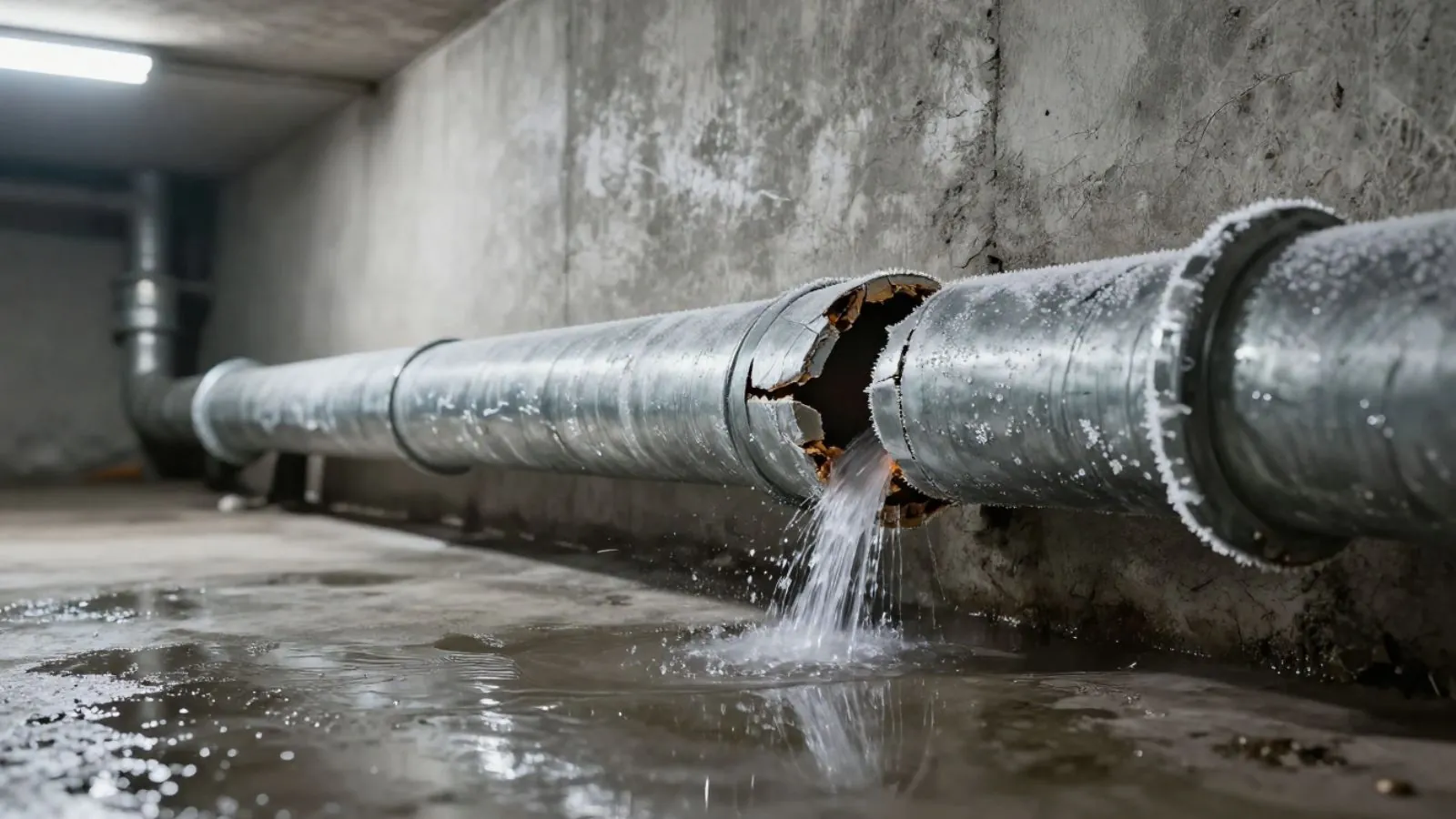
Emergency Frozen Pipe Water Damage in Deland, FL
Frozen pipes are rare in Central Florida, but a hard freeze can split lines in attics, outdoor walls and irrigation. Water floods when the ice thaws.
Frozen pipe damage usually shows up when the temperature rises and the ice melts, so call the 24/7 line the moment you see water. Shut off the main valve, open a faucet to relieve pressure and keep people away from wet outlets. Take photos of the split pipe and the wet area before anything is moved.
Frozen pipe water damage is the flooding that follows when ice expands inside a supply line and cracks the pipe or its fitting. Deland winters are mild, but nights below freezing happen in some years, and homes here are not built for hard freezes. That makes exposed pipes the weak point.
Frozen pipe emergency: what to do when the thaw starts
The crack often leaks only after the pipe warms, so water can appear hours after the cold night. Close the main valve, drain the lines by opening the lowest faucet and call right away. Same-day response is offered when available once the line has your address.
Do not use an open flame, a propane torch or a kerosene heater on a frozen pipe. Use a hair dryer or warm towels on a section that is still frozen and not yet leaking, working from the faucet end back toward the frozen spot. If you see a bulge or crack, leave it alone and call for help.
Where freeze damage happens in Deland homes
Freezes in Volusia County are short, so the vulnerable pipes are the ones with no protection at all. Outdoor hose bibs, pool equipment lines, irrigation backflow assemblies and attic runs are the usual victims. Wrap exposed lines and cover hose bibs before a forecast freeze, because a dollar of foam insulation beats a flooded laundry room.
Slab-on-grade homes keep most pipes below the cold, but water heaters in garages and outside utility closets are exposed. Many older frame houses in the West Deland Residential District have supply lines in outside walls with little insulation, so a hard freeze can crack a line inside a wall you cannot see.
Signs of frozen or split pipes
Frost on exposed pipe
A white coating on a garage, attic or outdoor line points to ice inside.
No water or a trickle
Taps that stop flowing during a cold night often have ice blocking the line.
Bulging pipe
A swollen section is about to split or already has.
Wet drywall after the thaw
Water appears in a wall or ceiling once the ice melts and pressure returns.
Water appearing after a cold night?
Shut the main valve and call. A crew can discuss same-day help.
How crews handle freeze damage
Crews extract water, locate wet cavities with moisture meters and thermal imaging, and open walls or ceilings only as far as needed. Air movers and LGR dehumidifiers then dry the structure. A plumber replaces the cracked pipe or fitting, and we work around that repair.
Wet attic insulation holds water against ceiling drywall for days. Removing it early prevents a second leak path that shows up as a ceiling stain weeks later. The ceiling repair page explains what that involves.
Repair options after a freeze burst
| Damage found | Option | Notes |
|---|---|---|
| Wet insulation in an attic | Remove and replace | Dry insulation cannot be trusted once soaked |
| Water in an exterior wall | Open the wall, dry, then close | Inspect for wet framing before patching |
| Soaked flooring near the break | Dry in place or remove | Depends on flooring type and how long it sat wet |
| Irrigation or hose bib line | Plumber repair, minimal restoration | Often limited to a flower bed or garage floor |
What changes the price of frozen pipe cleanup
- Whether the water ran for minutes or hours before the valve was closed.
- How many rooms and floors took water.
- Insulation and drywall that must be removed.
- Drying equipment days.
- Whether the break was in an attic or finished wall that needs rebuilding.
Insurance and freeze damage
Freeze damage is commonly covered when it is sudden, and policies often expect reasonable steps to protect the home, such as keeping heat on in cold weather. Check your policy wording on vacant or unheated properties. Notify your carrier within one year of the loss under Florida Statute 627.70132.
Serving Deland and nearby towns
The line serves Deland and towns such as Lake Helen and Cassadaga. A frozen line that failed inside a wall may also need our burst pipe cleanup steps, since the water behaves the same once it escapes.
The industry standard behind the work
Professional water damage restoration follows a published industry document, the ANSI/IICRC S500. It sets out how a loss is assessed, how affected materials are classified and how drying or cleanup is documented.
Ask any company how it applies that standard on your job. A clear answer should cover readings taken, equipment placed and the records you will receive. This page describes the approach, and it is not a claim about any individual certificate.
Questions we hear in Deland
Do you handle frozen pipe water damage emergencies at night or on weekends in Deland?
Yes. The line is answered 24/7 and freeze calls often come in the morning after a cold night. Shut off the main valve, then call and describe where the water is. A crew is lined up once your address and access are confirmed.
Do pipes really freeze in Deland?
Not often, but short hard freezes happen in some winters. Exposed outdoor lines, irrigation and attic pipes are the ones at risk because most homes here have no freeze protection.
Is it safe to thaw a frozen pipe myself?
A hair dryer on a section that is not leaking is safe. Avoid flames and heaters, and stop if you see a crack. Call a plumber and the restoration line if water appears.
Can I prevent frozen pipes during a cold snap?
Wrap exposed lines, cover hose bibs, open cabinet doors under sinks on exterior walls and let a faucet drip. These steps are cheap and take minutes.
Water spreading right now?
Call the line any hour. We will talk through the next safe step and what to expect from a crew.
Call (386) 699-0141