
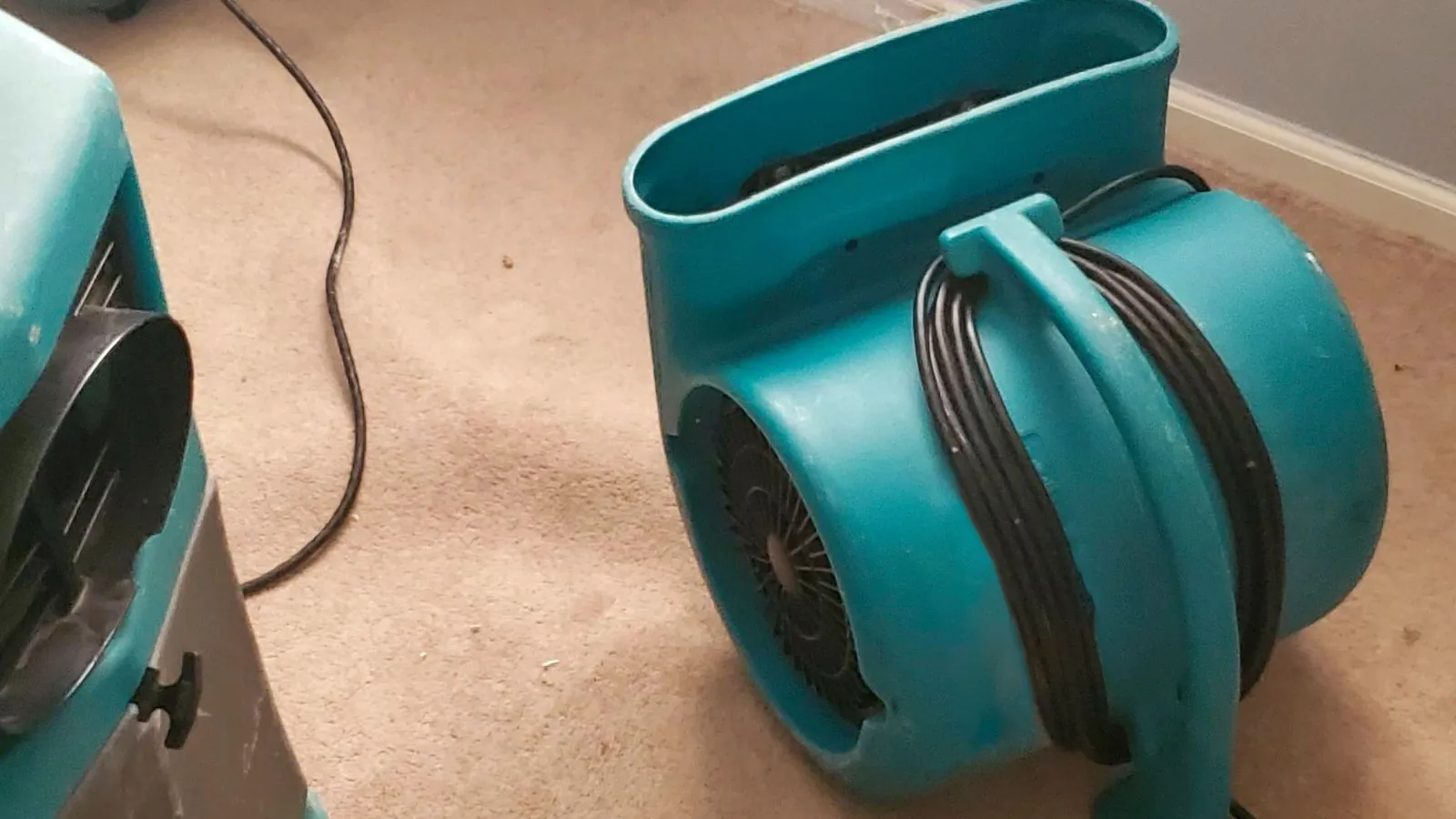
Structural Drying and Dehumidification in Deland, FL
Drying is where water damage jobs succeed or fail. Crews place air movers and LGR dehumidifiers, track readings and stop when the structure reaches drying goals.
Structural drying and dehumidification is the controlled removal of moisture from walls, floors, ceilings and framing after water has been extracted. It uses air movers to push air across wet surfaces and LGR dehumidifiers to pull moisture out of the air, with readings taken until materials reach normal levels. In Deland, humidity is high enough that outdoor air cannot do this job, so drying has to be done in a closed, controlled space.
If you are reading this days after a leak and the house still smells damp, call and describe it. A crew can take readings and tell you whether the structure is truly dry or only looks it.
Why do my walls still feel damp days after the water was cleaned up?
Surface drying hides moisture in the places that dry slowest. Drywall paper feels dry while the gypsum core holds water, and the bottom plate of a wall can stay wet behind baseboards. Insulation, subfloor and cabinet bases hold water long after the top layer feels fine.
Signs that moisture remains include a musty smell that comes and goes, paint bubbles, baseboards that pull away from the wall and floors that stay cool to the touch. A moisture meter and a thermal camera show wet spots that your hand cannot feel.
How structural drying works
Wet materials release water as vapor, and the air takes it up until it is saturated. Dehumidifiers remove that water from the air so the materials can keep releasing. Air movers speed up the transfer by moving air across surfaces, so the two types of equipment work as a system.
Measure
Moisture meters and thermal imaging set a baseline reading in every wet material.
Set up
Air movers and LGR dehumidifiers are placed to match room size and wet areas.
Monitor
Crews return to take readings and adjust equipment placement.
Finish
Equipment comes out when readings reach drying goals for each material.
Drying goals are set by comparing wet readings to dry reference readings of the same material in an unaffected part of the house. That comparison is what shows when a wall is truly dry.
Drying in a humid Central Florida house
Outdoor air in Deland is often more humid than indoor air during a drying job, so windows stay closed and the dehumidifier does the work. Cooling the house to a reasonable setpoint helps, since cooler air holds less moisture. Running your AC with the dehumidifier does not harm the drying and keeps the house comfortable.
Slab houses pose a particular challenge because concrete holds water and releases it slowly. A slab leak or a flooded floor can need extra days of drying, and the slab leak page explains why monitoring matters.
Equipment and what each piece does
| Equipment | What it does | Where it is used |
|---|---|---|
| Air movers | Push dry air across wet surfaces | Floors, wall bases, ceilings |
| LGR dehumidifiers | Pull moisture from the air at low humidity levels | Whole rooms and sealed areas |
| Moisture meters | Read water content in wood, drywall and concrete | Every wet material, every visit |
| Thermal cameras | Show temperature patterns that reveal wet areas | Walls, ceilings, floors before opening |
How long drying takes
Drying often runs several days, and the number depends on the materials, the amount of water and how fast extraction began. Dense materials such as hardwood and concrete take longer than drywall. Ask the crew for the specific drying goals and the date they expect to check them.
Equipment noise and electricity use are real trade-offs. Equipment runs around the clock, so plan for noise at night and a bump in your power bill, which you can mention to your adjuster.
What affects drying cost
- Number of rooms and size of the wet area.
- Type of materials, such as slab, hardwood, plaster or drywall.
- Pieces of equipment and days on site.
- Number of monitoring visits.
- Whether materials must be removed to reach moisture.
Insurance and drying records
Drying logs with dates, readings and equipment lists show an adjuster how the work was done and when it ended. Ask for a copy. Report the loss within one year under Florida Statute 627.70132.
Serving Deland and nearby towns
We run drying jobs in Deland and in towns such as Orange City and Lake Helen. Water that has already stained a ceiling may need our ceiling repair work, and lingering dampness can lead to mold remediation.
The industry standard behind the work
Professional water damage restoration follows a published industry document, the ANSI/IICRC S500. It sets out how a loss is assessed, how affected materials are classified and how drying or cleanup is documented.
Ask any company how it applies that standard on your job. A clear answer should cover readings taken, equipment placed and the records you will receive. This page describes the approach, and it is not a claim about any individual certificate.
Questions we hear in Deland
How do I know if my house is really dry?
Only readings tell you. A crew compares moisture meter readings in wet materials to dry reference readings and logs them until they match.
Why does my house smell musty after cleanup?
A musty smell often means moisture remains in drywall, insulation or subfloor. A crew can find the wet spot with meters and thermal imaging.
Can I use fans and a household dehumidifier myself?
For a small spill from a clean source, yes. For anything larger, LGR dehumidifiers and air movers dry far faster and more completely.
How long do air movers need to run?
Often several days, depending on materials and the amount of water. The crew sets goals and checks readings.
Water spreading right now?
Call the line any hour. We will talk through the next safe step and what to expect from a crew.
Call (386) 699-0141