
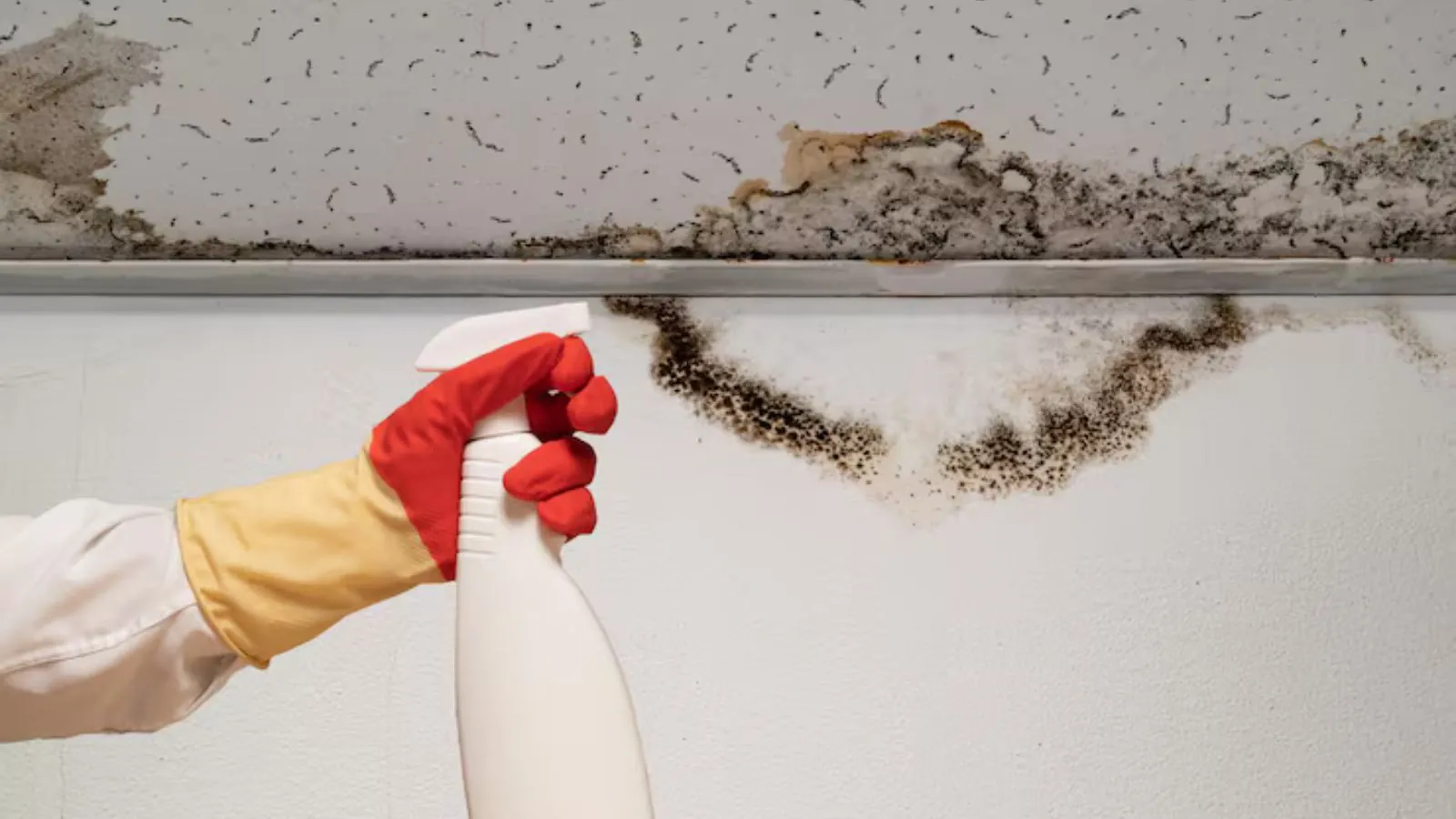
How to Get Rid of Black Mold in a Shower in Deland, FL
Dark spots on grout and caulk are common in humid homes. Here is how to clean them safely and when to stop and call for help.
Dark spots on shower grout and caulk are usually surface mold or mildew feeding on soap film and constant moisture. A small area on tile can often be cleaned, while growth behind the wall cannot. This guide covers the cleaning steps and the signs that the problem is bigger.
Check how far the growth goes
Press gently on the wall near the stain. If the grout is firm and the caulk is intact, the growth is probably on the surface. If tile feels loose, drywall is soft or the stain returns within days, moisture is getting behind the wall.
Surface only
Spots on grout and caulk, firm wall, no odor beyond the shower.
Behind the surface
Loose tile, soft drywall, stains on the ceiling or wall outside the shower.
Recurring
Returns within days of cleaning, so moisture is still present.
Large area
More than a few square feet, call for an inspection.
Safe cleaning steps for surface mold
Ventilate
Run the exhaust fan and open a window.
Protect
Wear gloves, eye protection and a mask.
Clean
Scrub with a detergent or a vinegar solution, then rinse.
Dry
Wipe surfaces and run the fan so the area dries fully.
Never mix bleach with ammonia or other cleaners. The combination can release harmful gas. Use one product at a time and rinse between them.
Replace caulk that is stained through, since mold roots into it. Scrape the old bead, let the area dry fully and apply mildew-resistant caulk. A fresh bead on a damp surface fails fast.
What grout, caulk and tile tell you
Grout is porous and absorbs water and soap, which is why it darkens first. Caulk is flexible and fails at the corners where the walls meet the tub or pan. Tile is hard and glazed, so mold on it is almost always sitting on soap film and wipes off.
If the grout feels crumbly or the caulk has pulled away from the wall, water is slipping behind the tile. Regrouting and recaulking is a repair many homeowners do themselves, but a loose tile that sounds hollow when tapped deserves a closer look.
Natural stone such as marble or travertine needs a stone-safe cleaner, since vinegar can etch it. Check the label of any product you use and test a small hidden spot first.
Fix the humidity that feeds it
Central Florida humidity keeps bathrooms damp. Run the exhaust fan during showers and for twenty minutes after, and check that the fan vents outside and not into the attic. Wipe the walls and door with a squeegee, and leave the shower door open so air moves.
If the fan is weak or noisy, replace it. A fan that moves little air is one of the most common reasons shower mold returns.
When to stop and call for help
- The stain covers more than a few square feet.
- Tile is loose or the wall feels soft.
- You see growth on the ceiling outside the bathroom.
- The smell remains after cleaning.
- You find a leak behind the wall or under the floor.
Our mold remediation page explains how crews contain and remove growth in walls. If the cause is a leak, our wall and drywall repair page covers the rebuild.
Sealing and finishing the shower
After cleaning, let the shower dry for a full day before sealing grout or applying new caulk. Use a grout sealer once a year, and choose a caulk labeled for kitchens and baths. A good seal keeps soap film and water out of the grout, which cuts the food that mold needs.
What not to do
Do not paint over mold, since paint hides it and the growth continues underneath. Do not run a dry fan on a wet wall and assume the problem is solved. Do not use a pressure sprayer on shower walls, because it drives water into seams and behind tile.
If you rent, tell your landlord in writing and keep photos with dates. Repairs behind walls are the owner's job, and a written record protects you.
Preventing the next patch
- Run the fan during and after showers.
- Squeegee walls and wipe grout weekly.
- Reseal grout once a year.
- Fix drips at the faucet and showerhead.
- Check under the vanity for leaks every few months.
If you live in Cassadaga or Glenwood in an older home, check the bathroom fan ductwork in the attic, since old ducts often come loose.
Questions we hear in Deland
Can I use bleach on shower mold?
Bleach can clean surface mold on non-porous tile, but never mix it with ammonia or other cleaners. Detergent and vinegar are alternatives.
Why does shower mold keep coming back?
Moisture is still present, usually from poor ventilation or a hidden leak.
Is black mold in a shower dangerous?
Color does not tell you the kind of mold. Clean small areas safely and ask a doctor about any health concerns.
When is shower mold a bigger problem?
When it covers a large area, returns quickly or appears with soft walls or loose tile.
Need help with water damage today?
Call the line any hour. We will talk through the next safe step and what to expect.
Call (386) 699-0141