
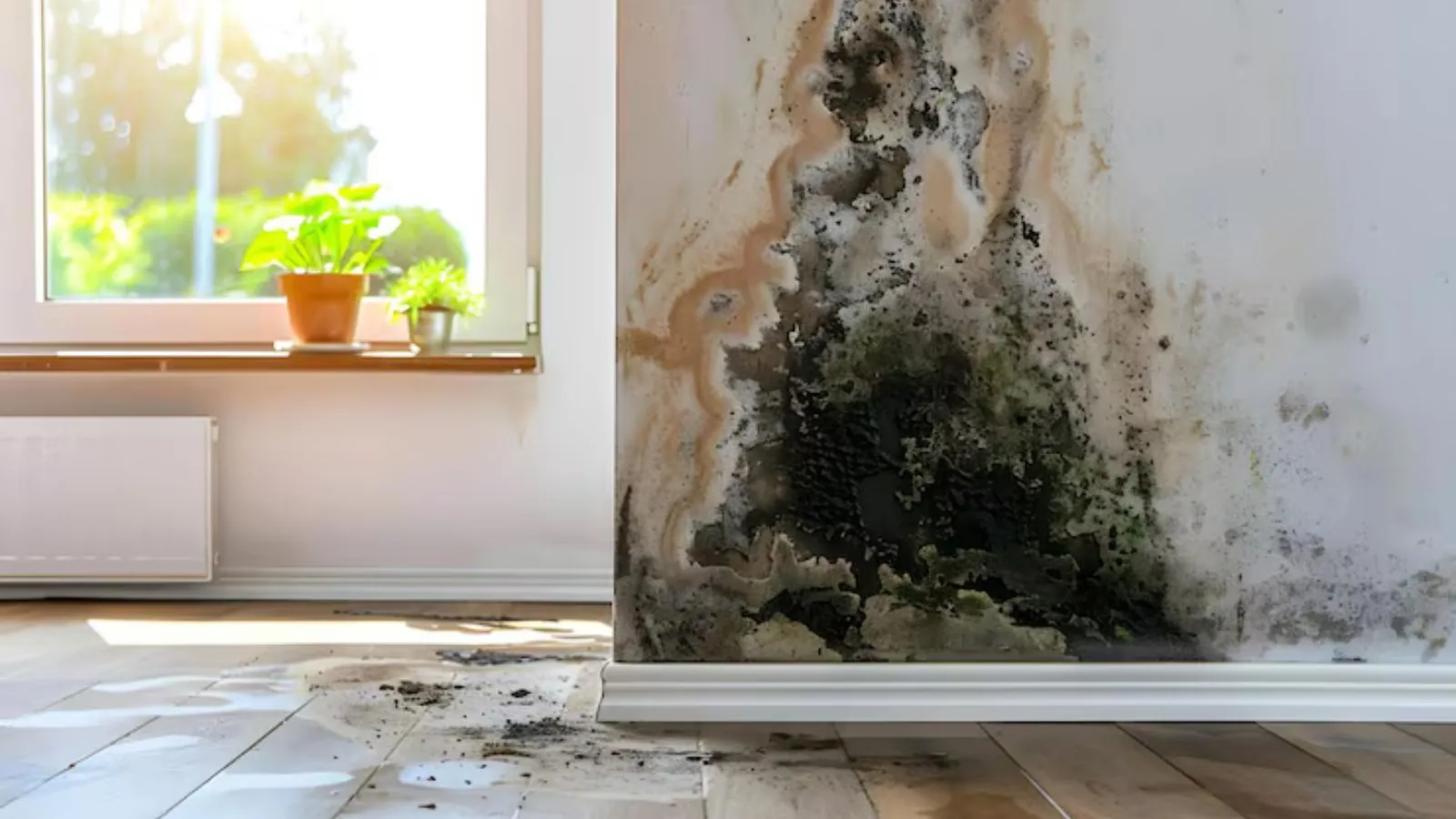
Mold vs Mildew in Deland, FL: How to Tell the Difference
Mildew sits on surfaces, while mold can grow into materials. The difference tells you whether to wipe it or call for help.
People use mold and mildew as if they mean the same thing, and in daily life the difference is practical. Mildew usually stays on a surface and wipes off, while mold can root into porous materials such as drywall and wood. Knowing which one you have helps you decide whether to clean it yourself or get an inspection.
Both need moisture, and Central Florida supplies it nearly all year. The real fix for either one is to remove the damp conditions, because cleaning without fixing the cause only buys a few weeks.
How they usually look and feel
| Feature | Mildew | Mold |
|---|---|---|
| Typical look | Flat, powdery or downy, white to gray | Fuzzy, slimy or spotted, many colors |
| Where it grows | Surface of tile, grout, fabric, paper | Surface and into drywall, wood, insulation |
| How it cleans | Wipes off with detergent | Often needs material removed |
| Smell | Light musty smell | Stronger musty or earthy smell |
| Usual cause | Humidity and poor airflow | Ongoing moisture or a leak |
The table is a rule of thumb. Color is a poor guide, since both can be white, green or dark. If you are not sure, treat it as mold and limit disturbance until someone has looked.
Where each tends to show up in Deland homes
Mildew shows up on shower tile, window sills, damp towels and the north side of a house that stays shaded. Mold shows up where water has been present for days, such as under a leaking sink, inside a closet wall near an upstairs bathroom or on a ceiling beneath an air handler.
A musty smell with no visible growth often means mold in a hidden space. A moisture meter and thermal camera can find it without cutting walls open. Our AC leak page explains a common hidden source.
What you can clean yourself
- Light growth on tile, glass or sealed surfaces.
- Mildew on a shower curtain or window sill.
- Spots on painted wood that wipe off and do not return.
Use gloves and a detergent or a vinegar solution, rinse and dry. Do not mix bleach with ammonia or other cleaners. Run the fan or the AC so the surface dries.
When to call for help
- Growth on drywall, ceiling tiles, insulation or carpet.
- A musty smell that remains after cleaning.
- Stains returning within days.
- Any growth after a leak or flood.
- A patch larger than a few square feet.
Our mold remediation page explains containment and removal. If the growth followed a leak, the wall and drywall repair page explains the rebuild.
What the stain is telling you
Mildew usually points to humidity and poor airflow, so the fix is ventilation, cleaning and a lower indoor humidity. Mold usually points to water, so the fix is finding the source and drying the material. Cleaning mold off a wall that keeps getting wet is a loop you can break only by fixing the water.
If you cannot tell which one you have, track it. Clean a small test patch, mark the date and see if it returns in a week. Fast return means moisture is still present.
A closer look at common surfaces
On tile and glass, growth sits on soap film and wipes off with detergent. On grout and caulk, it digs into small pores and may need replacement of the caulk. On painted drywall, a stain that returns after cleaning usually means moisture inside the wall.
On wood, such as window trim or a deck, growth can penetrate the surface and darken the grain. Light cleaning and drying help, but soft wood suggests rot and a bigger moisture problem. On fabric and leather, mildew often appears in closets and cars, and airing items in the sun and cleaning them helps.
Preventing both
Keep indoor humidity in a comfortable range, run bathroom fans during and after showers and fix leaks the same week. Clean spills within a day and let wet items dry before storing them. Keep furniture a few inches from exterior walls so air can move.
If you live in Glenwood or Cassadaga, old wood-frame homes may need extra attention to ventilation in closets and attics.
A few extra Deland tips
Window sills and sliding door tracks collect condensation in summer when cold indoor air meets humid outdoor air. Wipe them weekly and keep the AC steady instead of letting the house warm up while you are out. A steady setting keeps indoor humidity lower than cycling the system off and on.
A short decision path
Look
Is it on a surface or on a porous material?
Smell
Does a musty odor remain after cleaning?
Test
Does the stain return within days?
Decide
Clean it, or call for an inspection.
Questions we hear in Deland
Is mildew just early mold?
Mildew is a kind of mold growth that stays on surfaces. In practice, treat both as signs of moisture and fix the cause.
Can I tell mold from mildew by color?
No. Both come in several colors, so color is a poor guide.
Does bleach kill mold on drywall?
Surface cleaning does not remove growth rooted in porous drywall. Affected drywall is usually cut out.
Why does my Deland home smell musty after rain?
Damp materials and high humidity are common causes. A moisture meter helps find the source.
Need help with water damage today?
Call the line any hour. We will talk through the next safe step and what to expect.
Call (386) 699-0141